



Ivory Coast
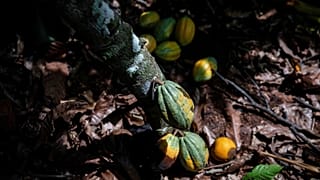
Cocoa bean plantations guarantee the livelihoods of almost the entire village of N'gattakro in central Ivory Coast. And the "brown gold" as cocoa gets called in Ivory Coast, is not only crucial for survival in this village: an estimated 6 million people in the country rely on farming and harvesting cocoa for their livelihoods.
But this year, the farmers worry that they might not be able to sell enough of their produce.
They fear the looming effects of the 21% tariffs on Ivory Coast exports to the United States, imposed by US president Donald Trump in early April.
Salif Traoré, one of the cocoa farmers in the village, explains: "The price isn't good. If we hear the American president came to put a tax on the price of cocoa, it's really not good for us, it doesn't help us.”
Cocoa is Ivory Coast's main export to the United States.
Like Traoré, the tariff news has left many farmers in confusion during an already difficult season due to unfavourable weather conditions.
"You see, this stockroom is full. Donald Trump's customs tax is causing us problems. Because of this, people can't buy our products. We are already feeling the effects, so if there's a solution to this problem, we'd be happy," Boss Diarra, cocoa farmers union coordinator, said.
A crucial export product for Ivory Coast's economy
Ahead of Ghana, Ivory Coast is the world's largest cocoa producer.
Selling the precious beans makes up between 15 and 20% of the country's GDP.
In this context, the situation also has the government worried over the effects of Washington's new trade policy.
Amadou Coulibaly, government spokesperson, said in response to the new tariffs: “We are affected because about 4% of our trade takes place with the United States. This mainly concerns cocoa, rubber, and a little cashew."
On 11 April, US president Donald Trump announced a 90-day pause on some of the tariffs. Yet a new universal 10% tariff will still apply.
"We must first try to see what new outlets we can find for our products to be able to compensate for this loss," Coulibaly continued.
While Ivory Coast could thus turn more extensively to European consumers, the global demand for chocolate - and thus cocoa as main ingredient - has stagnated in recent years.
At the same time, prices for cocoa have repeatedly hiked up, partially due to the effects of climate change, which has caused insufficient rainfall and a disappointing harvest last year.




02:03
Minneapolis residents sceptical about planned withdrawal of some ICE agents
01:12
US President Donald Trump signs short-term extension of AGOA
02:08
Somali mothers strenghten Minneapolis community with traditional tea
Go to video
Nigeria hires US lobby firms amid Trump claims of christian ‘genocide’
01:01
US judge blocks administration bid to end Haitians' protected status
Go to video
Infantino defends FIFA Peace Prize award to Trump, considers end to Russia ban